Commercial Roofing in Grover, NC
A manufacturing roof with a ponded corner and a patch from three owners ago is a finding we would expect to read in Grover, NC and it raises one question: what does the next storm cost against what a repair costs this quarter? Grover is a Cleveland County town of 802 residents that straddles the North Carolina and South Carolina line. Companies in the area include Eaton, Commercial Vehicle Group, 84 Lumber and Uniquetex. I-85 and US 29 serve the town, and Norfolk Southern tracks run through it. We walk each roof, photograph what we find and put two prices on paper. We start with the roof and finish with a date.
Read Industrial Roofs Section by Section
We do not assume what any plant, yard or warehouse carries on top. Industrial roofs come in sections, with different ages, additions and repairs. A building that grew in three phases has three roofs under one name.
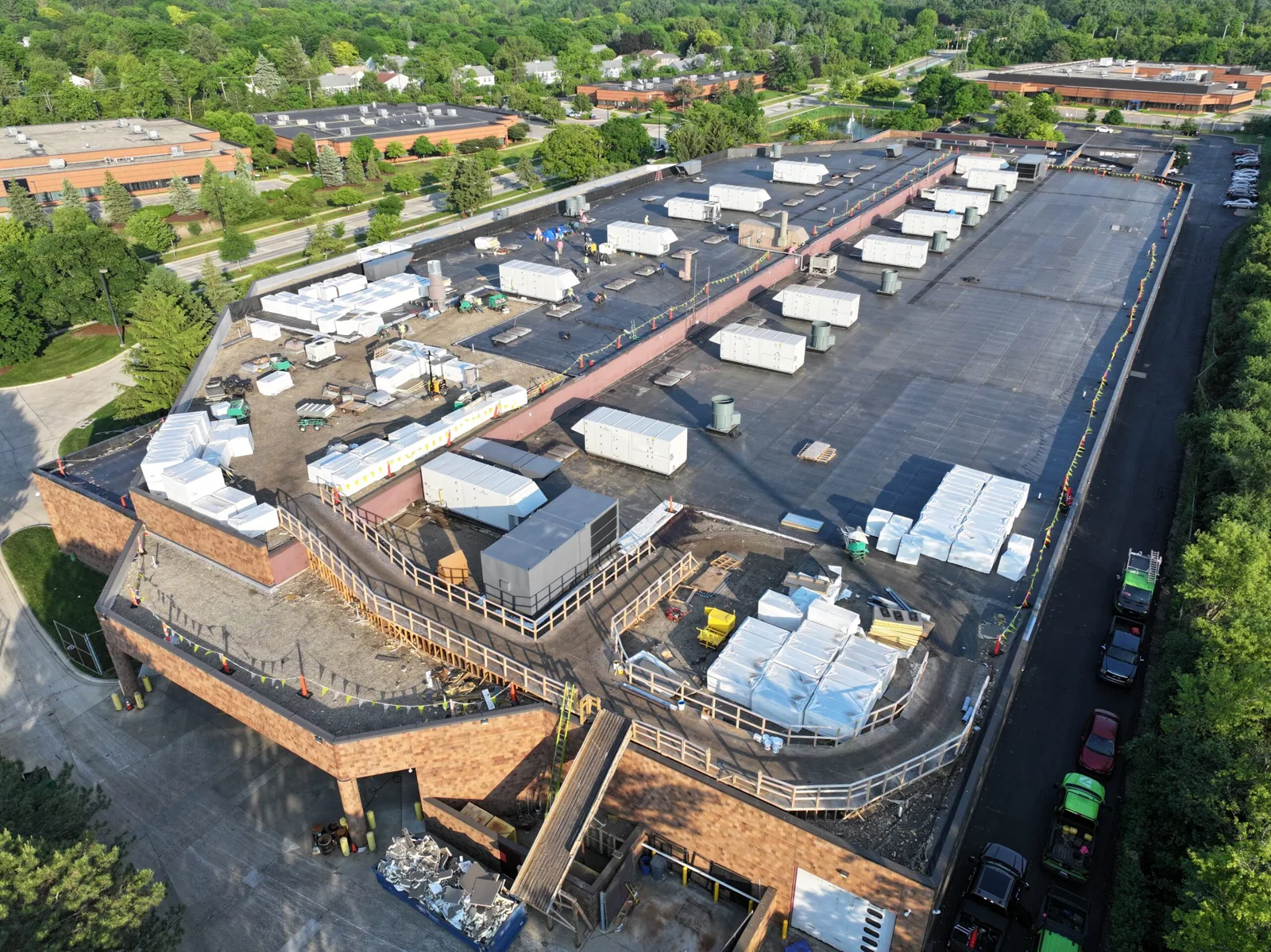
On the walk we separate each section and log its condition: seams, edges, drains, penetrations, equipment and past patches. Process exhaust and heat can age a membrane near vents, so we check those zones for softening and staining. We give every section a remaining service life estimate and a line in the capital budget. Skylights, roof hatches and old vents add leak points to an older plant. We count them and cap or seal the ones that are no longer used. Dead penetrations are cheap to close and expensive to ignore. Equipment screens and catwalk supports get a look too, since each fastener is a hole. A phone quote is the shortcut, and on a plant roof it is usually the wrong one. A walk gives the real answer, costs less than a wrong repair and leaves a photo log as the first page of the roof file. Walkways matter on a plant roof. Technicians who service units wear paths in the membrane. We add pads where traffic is steady and flag any path that has worn through.
Handle Yard Buildings and Long Metal Roofs
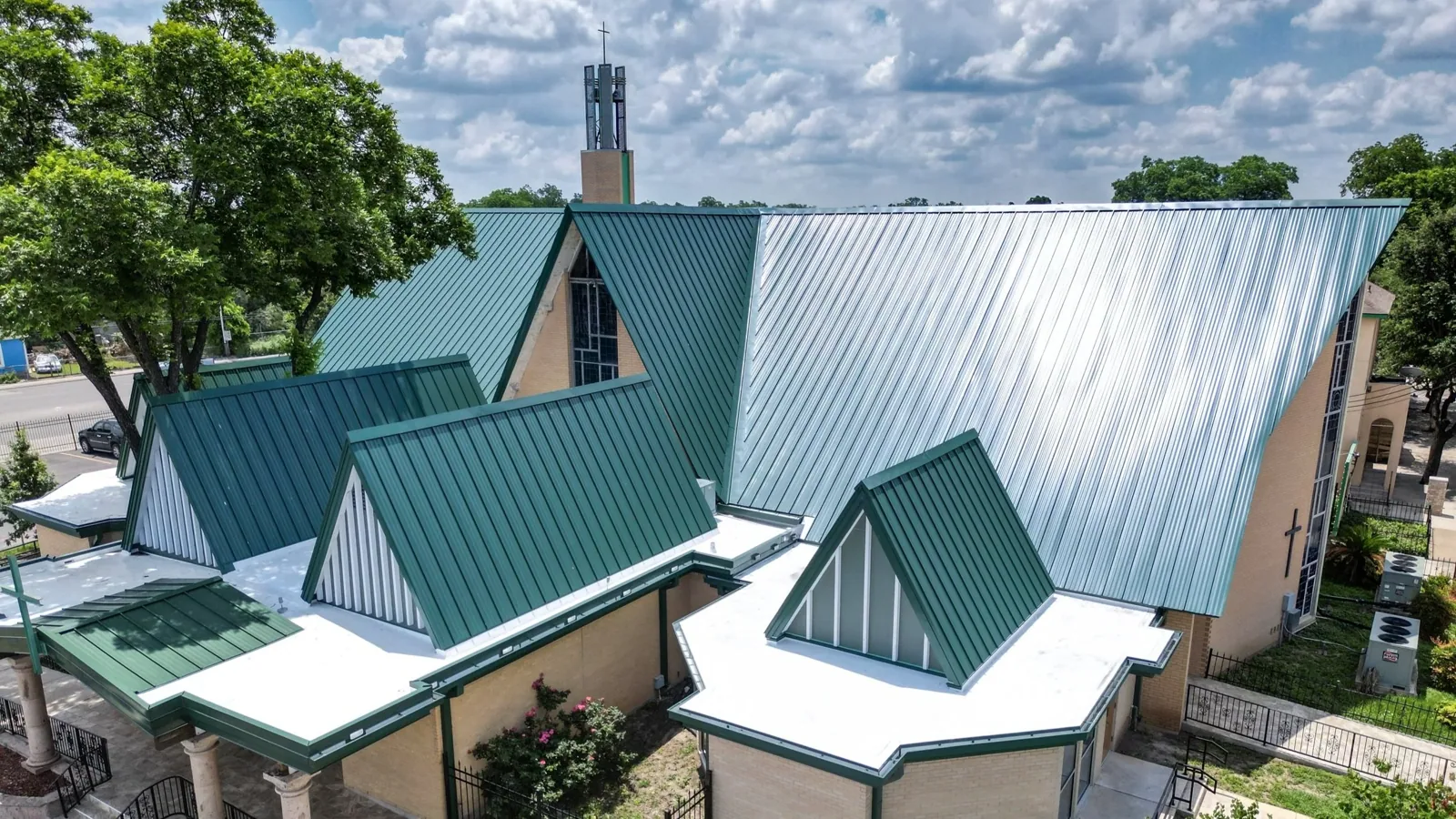
Lumber yards, supply sheds and storage buildings often use long metal roofs with exposed fasteners. We expect backed-out screws, cracked washers and open laps there, and we check them. A section that needs new screws is a maintenance job. A section with rotted purlins needs a different plan.
Count the failed fasteners per square and walk the panel runs. Look inside for daylight at laps. Wet stock under a leak costs more than the repair, so rank those bays first. We give the owner a map and a price for each choice: re-screw, coat, retrofit or replace. Gutters and downspouts matter on long roofs. A clogged gutter sends water under the lower panels, and a downspout that dumps beside a wall undermines the slab. We clear them, photograph them and note where water leaves the roof and where it lands. Open-sided sheds and canopies take wind differently from closed buildings. Uplift can lift panels from the edge. We check the fastener pattern at eaves and rakes, and we note any panel that has started to peel back. Edge metal is the cheapest fix and the most important one.
Watch the Rail and Interstate Edges
Rail lines and an interstate can bring grit, vibration and truck traffic to the edge of a property. Grit packs scuppers, packed scuppers hold water and held water ages the membrane. Drains are cleared, with photos before and after.
Dock canopies tie into walls, and the tie-ins crack. Water runs behind flashing and shows up inside the dock door. We check each canopy and give a price to fix it while it is still a flashing job. We plan work around truck traffic and stage materials away from the docks. Hot work needs a plan near rail and fuel. We use cold-applied methods where the site calls for them, and we confirm rules for permits and fire watch with the owner before the crew arrives. After a storm, find out what your insurer wants to see. Dated photographs, a roof sketch and a written scope are typical, and we assemble all three and keep a copy, so the claim does not wait on paperwork.
Confirm Which Code Applies on the State Line
Grover straddles the state line, so a building's location decides the governing authority. On the North Carolina side the 2018 State Building Code is still the enforced edition, with the 2024 edition awaiting its effective date, though Section 102.5 of the 2018 administrative code gives an owner a way to ask for the newer one. For a building on the South Carolina side, the local authority decides.
We confirm the governing office before the scope of work is written and list code-driven items on their own lines. You see what the code adds to the price, and the permit goes to the right desk the first time. A building that sits partly on each side of the line is a question for the permit office, not for the roofer. We bring the drawings, ask the question early and write down the answer. Permits are quick when the drawings match the site. They stall when the address sits on the wrong side of the line. A phone call to the permit office before the bid costs nothing.
Price the Heat, Rain and Wind
Gastonia sees a July mean daily high of 90.7 F and roughly 44 inches of precipitation a year. At Rock Hill, on the southern side of the service area, July highs average 91 F, the record stands at 106 F and precipitation runs near 42.6 inches. Across this stretch of the Piedmont, heat and heavy rain wear roofs more than snow does.
The May 8, 2024 EF-1 tornado across Gaston County, estimated at 110 mph, took part of one East Gastonia warehouse's roof. The lesson for any owner is to check edge metal and coping before the season, not after. Charlotte, the metro core, has logged 104 F highs and, in December 2002, an ice storm that cut power to more than 1.3 million people. Those are regional figures, yet they frame the stress a roof here must survive: hot summers, soaking rain, the occasional ice event. Tight seams, clear drains and sound edges are what get a roof through, and all three are on our checklist.
Keep the Roof File Current
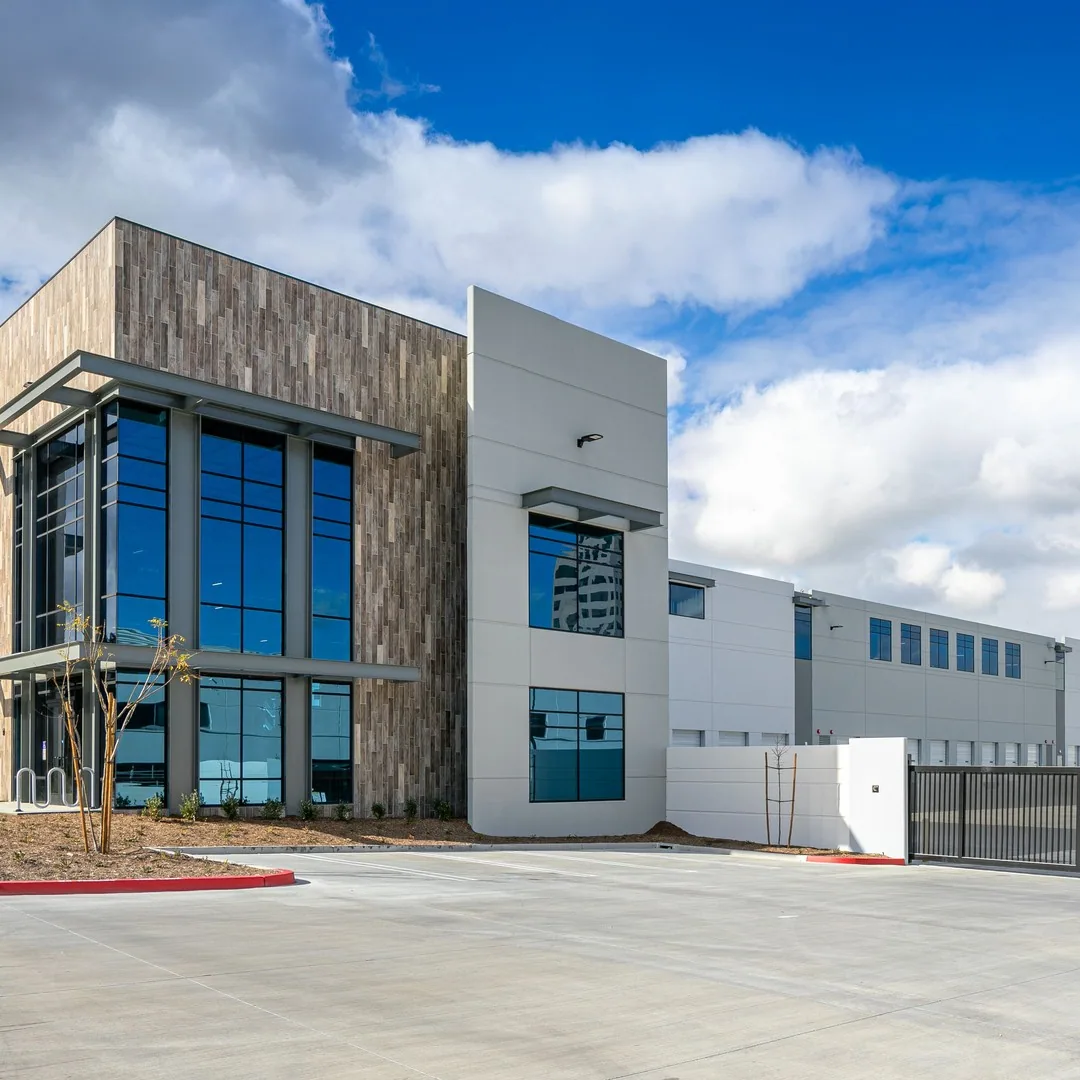
A roof file with photos, cores, moisture results and a ranked list is the document a lender, an insurer or a buyer wants. A plant roof and a warehouse roof in Grover get the same file format, and a long metal building with failing screws gets a retrofit price beside the repair price. An infrared moisture survey maps wet insulation before any of those numbers is final, and an owner with buildings in Shelby or Belmont can run them on the same scale. Store the file where the plant manager and the owner can both reach it. Photos, cores and scans go in one folder per roof section, and each repair gets a date. A lender reading the file wants the date of the last inspection, the open items and the reserve. Put those three at the top and the rest follows.
Commercial Roofing Questions
How do you rank roofs on a multi-phase plant?
By what sits below, then by condition. Active leaks over production or stock come first, then recurring defects, then stable sections.
Can exposed-fastener metal roofs be saved?
Often. Re-screwing and resealing laps fix many roofs. If purlins are rotted or insulation is wet, retrofit or replacement fits better.
Which code applies on the state line?
The authority for the building's location decides. We confirm it before the scope is written.
What does waiting cost?
Wet insulation and damaged stock. A small leak left through a wet season can turn a repair into a tear-off. We put both numbers on paper.
Do you review other bids?
Yes. Send the scope and we walk the roof, then set our findings beside it line by line.
Topic
Grover
Roof Types
Low-slope and metal
Related Roofing Work
Manufacturing Plant Roofing
Warehouse Roofing