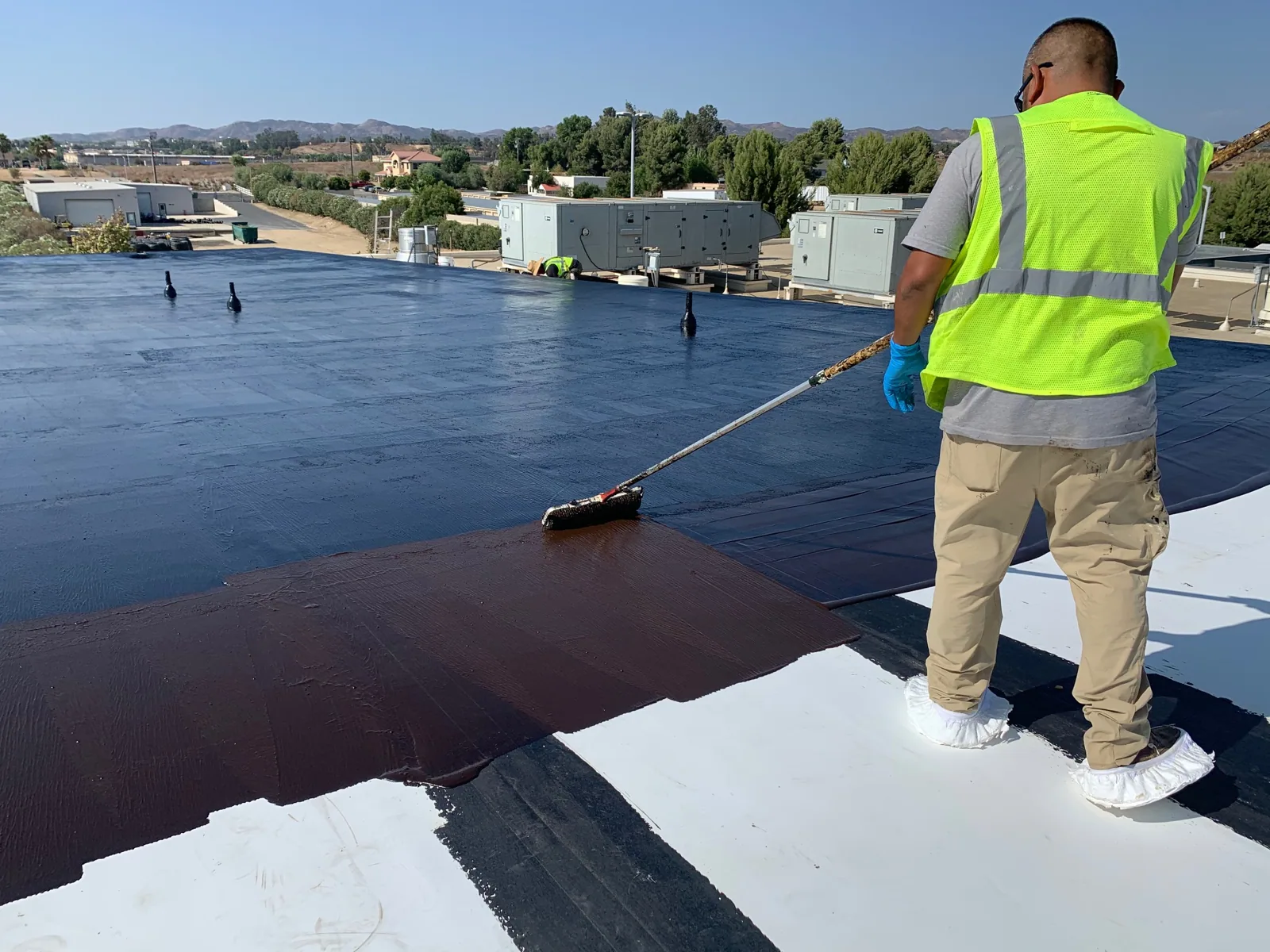

Built-Up Roofing in Gastonia, NC
Bare felt showing through a thin spot in the gravel, with a blister the size of a dinner plate beside it, is a finding a roofer sees on a built-up roof that has outlived its surfacing. Water that gets through a built-up roof does not stay where it enters. It travels between the plies, so the leak inside is often far from the hole. What that means for the owner is a choice between a repair that tracks the water and a replacement that stops chasing it.
Built-up roofs in Gastonia, NC get a walk, a core and a written verdict on repair, recover or replacement. The photo log from the visit stays with the file, and a leak on a weekend night still reaches a crew.
See what a built-up roof is
A built-up roof is layers: alternating plies of reinforcing felt and hot or cold asphalt, topped with a flood coat and gravel, or with a cap sheet. The layers make it thick, redundant and tough underfoot. They also make it heavy and hard to diagnose, since a leak in the top ply may show up in a ceiling many feet away.
On a walk we look at the surface first. Exposed felt, alligatored asphalt, blisters, ridges over deck joints, and gravel pushed into piles by wind are the usual findings. Then we probe suspect spots, cut a core to see the plies and the moisture, and photograph each find in the photo log. The core tells us how many layers remain and whether the bottom ones are wet.
Blisters need a decision of their own. A small blister that is dry may be left and watched. One that is soft, wet or cracked is opened, dried and patched. A cluster across the field points to trapped moisture between the plies, and that pattern changes the whole scope. We press and photograph each, mark them on the plan and record whether they have grown since the last walk.
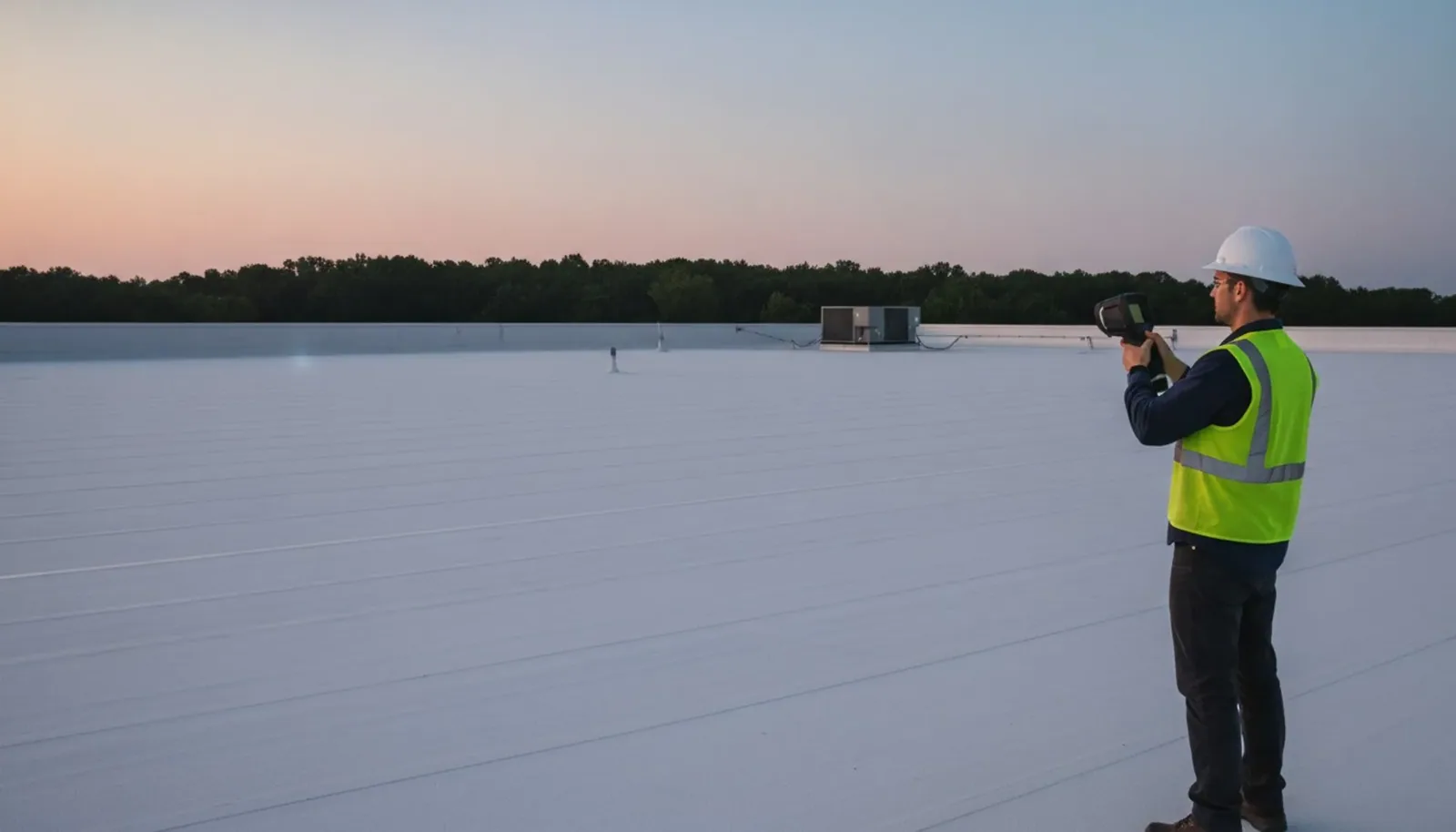
An infrared moisture survey pairs well with cores on a built-up roof, since the heavy surface hides wet areas from the eye. The survey maps cool, wet zones across the field, and the cores confirm a few of them, which is how a scope is cut to the wet area. Without the map, owners replace dry sections or patch wet ones, and both cost money for nothing.
Respect the layers under an old mill roof
Gaston County once had more cotton spindles in operation than anywhere else in the country, and a brick mill like the five-story Loray Mill from 1900 now sits in a district being redeveloped. A roof on a building with that history may have been renewed several times, and each renewal adds weight.
Weight is a decision point. A recover adds another layer, and the deck must carry it. Cores show thickness and moisture, and the structure is checked before any recover is priced. A heavy, wet base is torn off. A dry, firm base may take a new cap or a coating. We say which in the scope and give the owner the cores to show a partner or lender.
Gravel is its own item. It protects the surface from sun and traffic, but wind and water move it, and a bare patch ages quickly. Gravel also clogs drains and scuppers when it migrates. We note where it has moved, where it is thin and where it has built up, and we recommend replacing it or removing it depending on what is under it. Clean drains matter a great deal on a gravel roof.
Count the cost of waiting
A bare spot patched this quarter is a small line item. The same spot left through a hot summer and a wet spring lets water between the plies, and the repair becomes a search. The wet area grows, the insulation holds the water, and a modest patch becomes a section replacement.
Gastonia's July mean daily high is 90.7 degrees, and annual precipitation averages about 44 inches. Heat softens asphalt and moves the surface, and rain finds the openings. The options go side by side: repair, coat, recover or replace, each with its own decision date. The scope names what drives the price: wet insulation, access, layers, deck repair and the system chosen.
Built-up roofs carry their remaining life in the plies. Sound plies under a worn surface mean restoration pays. Wet plies near the end of their run mean replacement pricing should start while there is still time to compare bids and pick a season. A roof between those cases gets a limited repair and a recheck, and the next walk decides whether the replacement date moves.
Choose repair or replace
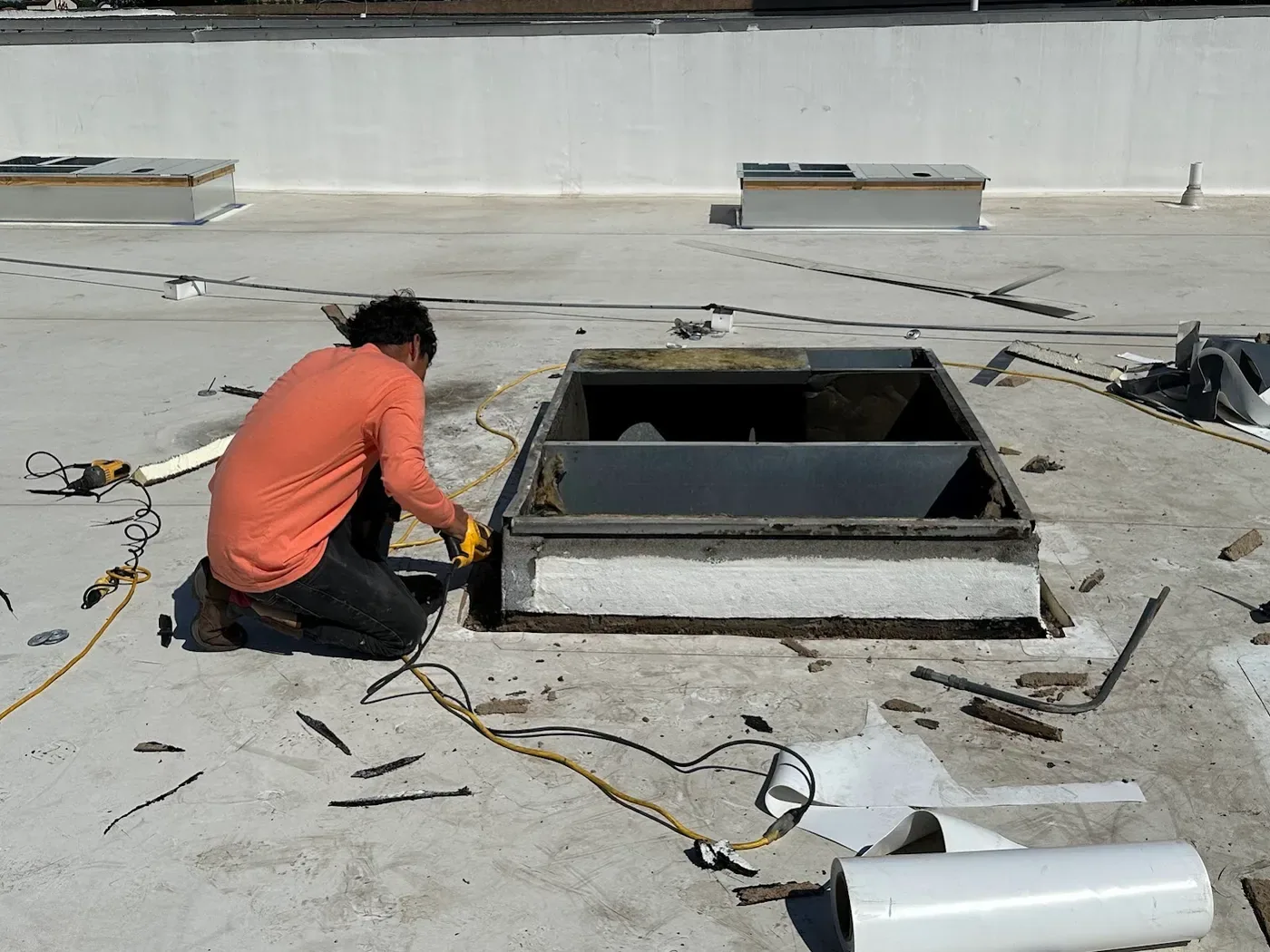
A local failure over a dry base is a job for commercial roof repair: patch the blister, spread new flood coat and gravel, rebuild the flashing. A sound surface can take a restoration coat, and a dry, firm base that the structure can carry may take a recover.
Replace when moisture has spread through the plies or the felt has aged past holding a patch. A new roof may be built-up again, or modified bitumen or a single-ply such as TPO. Fire safety matters during tear-off and any hot work: kettles, torches and asphalt fumes are managed with permits, fire watch and, where needed, cold-applied alternatives.
Storm records give context. The EF-1 tornado of May 8, 2024 carried estimated 110 mph winds across Gaston County. Heavy gravel surfaces behave differently in wind than light membranes, and we check edges, flashings and loose gravel after any hard storm.
Every set of findings ends with a review date: when we recommend the next look, what we will check and what result would move replacement up. The date belongs in the budget cycle, because it keeps a good roof from being replaced early and a bad one from being replaced late.
Check Gaston County's older buildings
Downtown Belmont's historic district holds 264 buildings from 1850 to 1949, and the Mount Holly Cotton Mill, begun in 1875, is the oldest mill still standing in the county. Older commercial buildings like these can carry built-up systems, and each roof is read one at a time.
A walk in Belmont or Mount Holly starts the same way as one downtown: surface first, then probes, then a core. The result is a findings summary the owner can lift into a budget memo.
Commercial Roofing Questions
Why does a built-up roof leak far from the hole?
Water travels between the plies and along the deck before it drops. A core cut and a moisture survey trace the wet path back to the real entry point.
Can a built-up roof be coated?
If it is dry and sound, yes. A coating protects the surface and can add years. We test moisture first, since coating over wet plies hides the problem.
How heavy is a built-up roof?
Heavier than most single-ply systems, especially with gravel. That matters for a recover. We check the deck and structure before adding a layer.
Is hot work safe on an old building?
It carries fire risk. We use permits, fire watch and, where the building calls for it, cold-applied materials. The method is in the scope before the work starts.
What helps before the first roof walk?
Roof age, building use, leak history and repair invoices are what we ask for. A findings summary in writing comes back with a plain answer on repair or replace.
Topic
Built-Up Roofing
Roof Types
Low-slope and metal
Related Roofing Work
Infrared Roof Moisture Surveys
Commercial Roof Repair