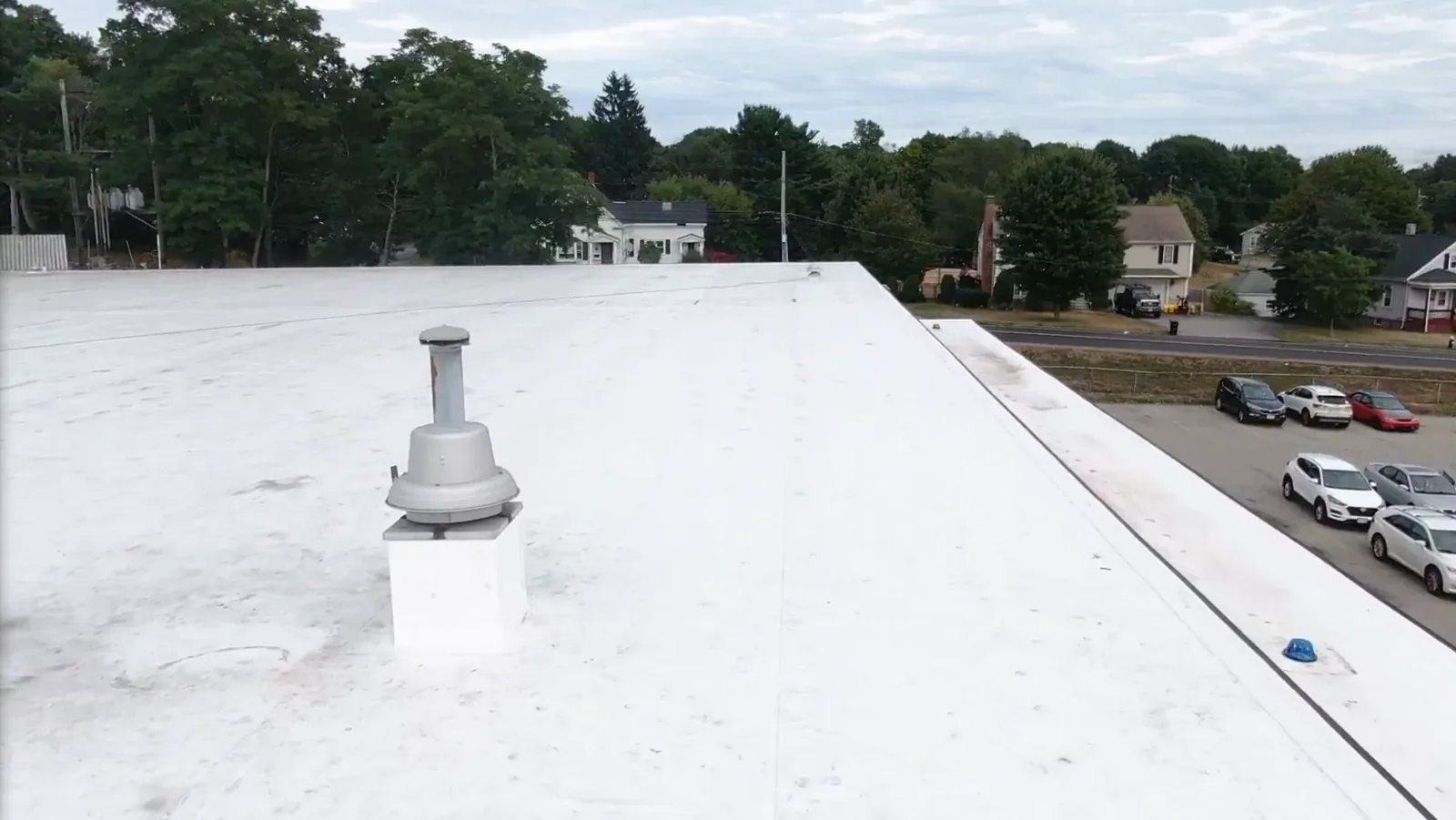

Cold Storage and Freezer Building Roofing in Gastonia, NC
A damp, sagging insulation board visible around a penetration above a cooler is the finding that tells a roofer the roof is losing a fight it cannot see. The membrane on top may be intact. The vapor path underneath is not. What that means for the owner is a number nobody wants: the energy cost of cooling a building through wet insulation, plus the replacement bill that follows if it goes on.
Cold storage and freezer buildings in Gastonia, NC get a walk that follows every detail from the membrane down to the vapor path. The photo log and the written repair-or-replace answer come after, and a freezer emergency gets a response at any hour.
Understand a roof over a cold room
A roof over a cooler or freezer works against the weather in both directions. Rain comes from above, and humid air pushes down from outside toward the cold interior. Any gap in the vapor retarder lets that moisture reach the cold insulation, where it condenses or freezes. Over seasons, the insulation fills with ice and water and stops insulating.
So the membrane is only half the roof. The vapor retarder, the insulation and every penetration through them matter as much. A cut conduit, a loose refrigerant line or a failed boot is a path for humid air, and it can start a failure that no patch on top will cure. We check the details from the top and ask what the interior shows.
Fasteners can be cold bridges. In a mechanically attached system, a fastener that passes through the vapor retarder and the cold insulation carries cold up to the membrane, and frost can form around its head. We look at fastener patterns where cores show frost, and we recommend an adhered or ballasted system when the pattern repeats across the roof.
Read the signs from above and below
The signs come from both sides. From the inside: frost on the deck underside, ice at a ceiling seam, drips at light fixtures, damp insulation at a penetration. From the roof: a cold patch that does not melt after a frost, wet insulation at cores, a soft area under foot and a line of staining near a vent.
We log the interior signs with the facility team, then walk the roof and photograph each detail above them. An infrared moisture survey maps the wet and cold zones, and cores confirm what is under the surface. The photo log ties the two sides together so the owner sees a single picture of the failure.
Dock doors and canopies are another source. Warm, humid air meets cold surfaces at door frames and canopies, and ice builds at the roof edge. A canopy that drips onto a dock apron is a slip hazard. We log the zones, rate the canopy flashing and drainage and note where ice has pulled flashing loose after a thaw.
Weigh the Piedmont climate
The Piedmont summer is warm and wet: July highs in Gastonia average 90.7 degrees, precipitation runs about 44 inches a year and snow is a minor factor at about 1.2 inches. The vapor drive in a Piedmont summer is strong, because the air outside is hot and wet and the room inside is cold. Charlotte, the metro core about 21 miles east, has recorded 104 degrees, and a December 2002 ice storm left more than 1.3 million people without power.
Power loss matters to a cold building in a way it does not to a dry one. A roof that lets moisture in raises the refrigeration load, and a storm that takes out power makes the interior vulnerable. We note the cooling load impact in the findings and recommend repairs that reduce it, with the cost laid beside the savings the owner can verify from utility bills.
Price the cost of waiting
A sealed penetration and a patch of dry insulation are small line items. Waiting lets frost build in the insulation, and the cooling bill climbs while the roof deck corrodes. By the time ice shows on the deck underside, the insulation may be a total loss. Then the repair is a replacement of the assembly, and the facility may have to move product during the work.
Four paths get priced: patch the penetration now, rebuild one wet bay, replace the full assembly, or hold with a dated recheck. The price swings with the volume of wet insulation, the vapor retarder work, access, what refrigeration will tolerate, the number of penetrations and the system chosen.
Years of service left is a capital number, and a cold roof carries it with extra weight because failure shows up on the utility bill first. A roof with dry insulation and a tired membrane stays in upkeep until the numbers say otherwise. A roof with frost forming in the layers needs replacement pricing started well before the next defrost season, so the work lands in a quiet window. Anything between gets a limited repair and a recheck date written on the page.
Choose repair or replace
Repair when the vapor retarder is intact and the wet area is small. Reseal the penetration, replace the wet insulation and restore the membrane; commercial roof repair may be enough. Replace a section when wet insulation covers a bay. Replace the roof when the assembly has failed broadly or the membrane has aged past holding a repair.
A new assembly gets a continuous vapor retarder, enough insulation and a membrane such as PVC or TPO. Work is phased so cold rooms stay in service, and each section is sealed as it is finished. A distribution center with a cold section is walked as one building with two roofs.
Timing follows operations, and a dry warehouse roof beside a cold section runs on a different calendar. Peak shipping seasons, product loads and defrost cycles limit when a section can be opened. We ask for the facility calendar and place work in quiet windows. A section is opened only when it can be closed the same day, and the vapor retarder is restored before the membrane goes back on.
Place the work on the right Gaston County site
One mile north of I-85 near Bessemer City, SouthRidge Business Park offers 425 acres for distribution and manufacturing, with Hunter Douglas, Dole Fresh Vegetables and Advanced Drainage Systems as tenants. Delivered buildings at Gateway85, between Gastonia and Lowell, total 2.4 million square feet. A cold room may sit inside a larger building, and the roof plan marks each conditioned zone.
Walks start at the Bessemer City business parks and Gateway85 alike with the same question: what is the temperature under this roof? The answer sets the order of work and the design of any repair.
Commercial Roofing Questions
Why does a freezer roof need a vapor retarder?
Humid air pushes toward the cold interior. The retarder keeps it from reaching the insulation, where it freezes. Without it, the insulation fills with ice and stops working.
Can a cold storage roof be replaced while the building runs?
Often. We phase work by section, keep cold rooms closed and seal each section as it is finished. Refrigeration loads and door traffic are checked with your team beforehand.
How do you find wet insulation over a freezer?
An infrared survey maps temperature differences, and cores confirm the moisture. We cut as little as possible and patch each core the same day.
Does a power outage change the roof plan?
It raises the stakes. A roof that lets moisture in raises the load, and an outage stresses an already wet assembly. We prioritize repairs that cut the moisture path.
What do you need to evaluate a cold roof?
The roof age, a layout of cold and dry zones, frost or leak history and repair invoices. Our findings summary comes back in writing, with repair or replace answered plainly.
Topic
Cold Storage and Freezer Building Roofing
Roof Types
Low-slope and metal
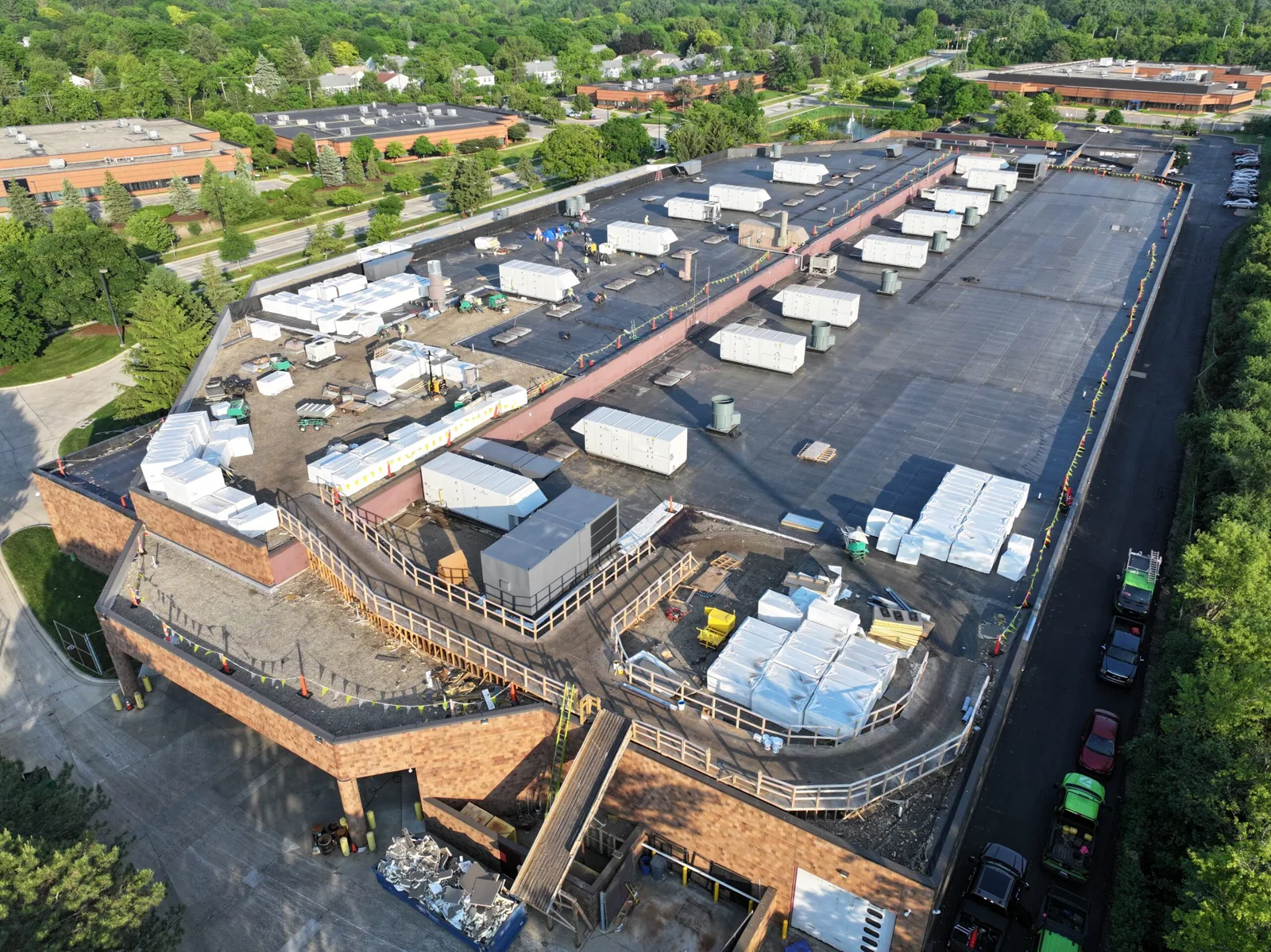
Related Roofing Work
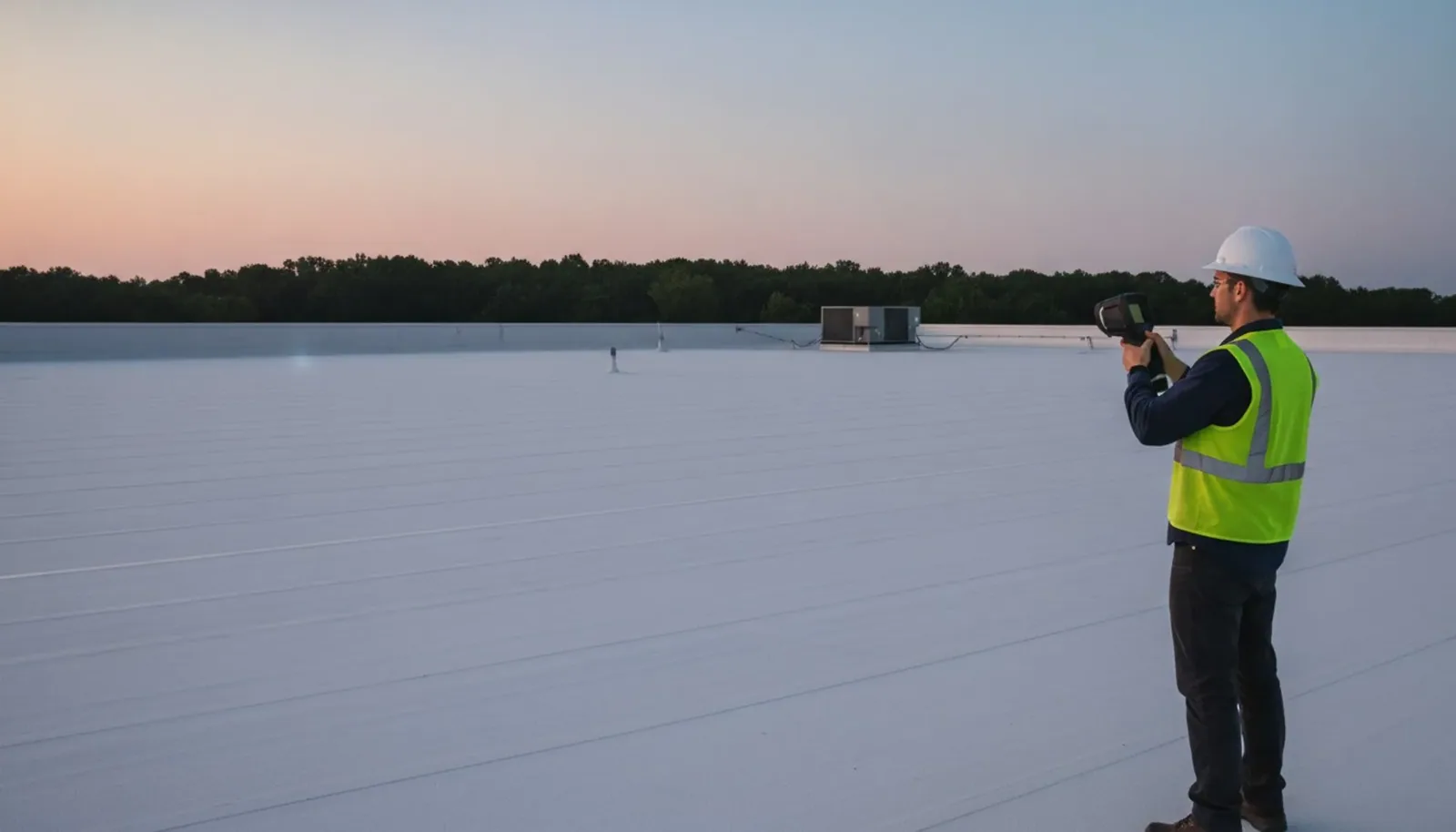
Infrared Roof Moisture Surveys
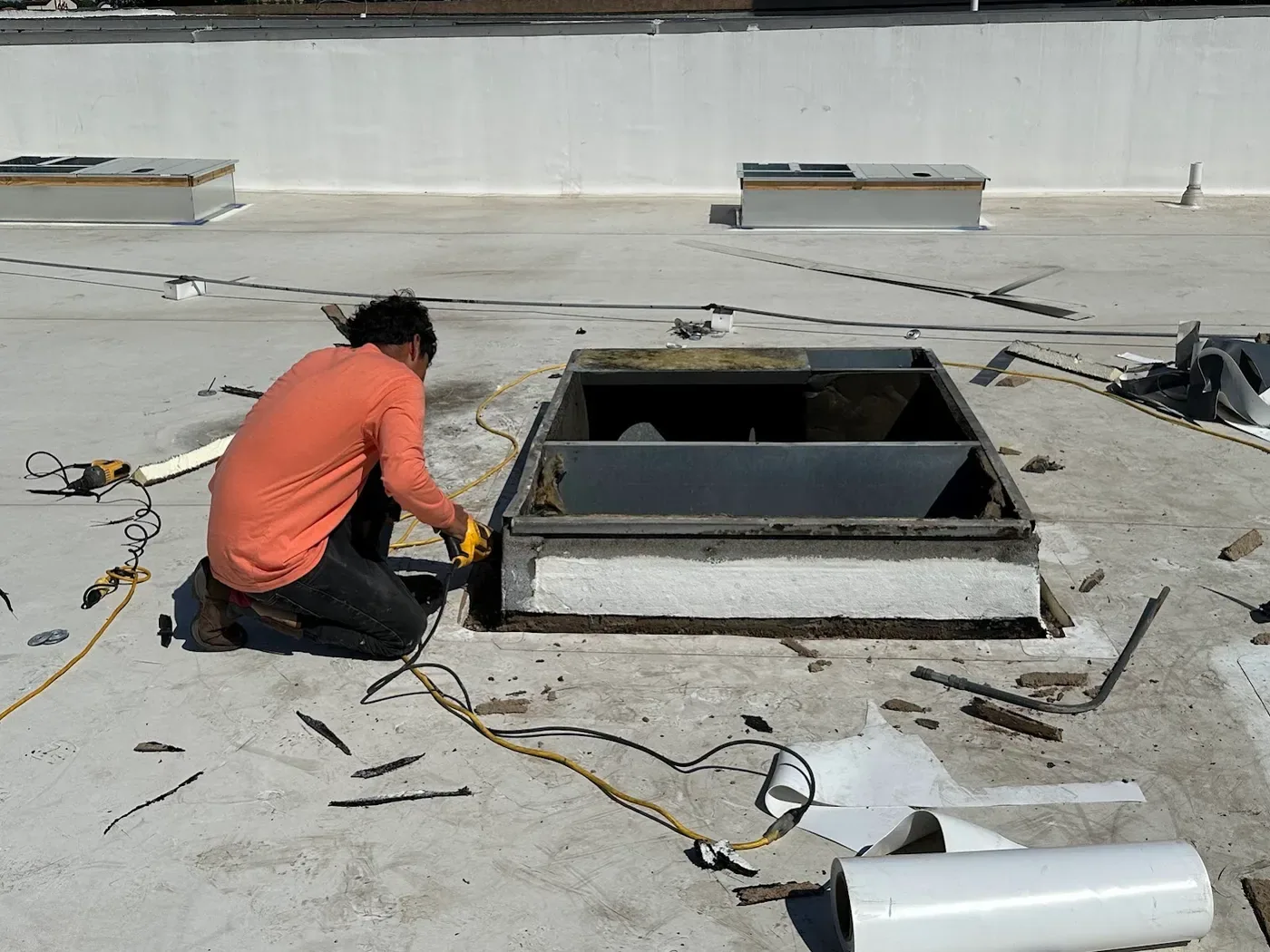
Commercial Roof Repair